


Did You Know… The Story of Fry Bread
Authored by Kellie Grace, Indigenous Relations Coordinator at City of Medicine Hat
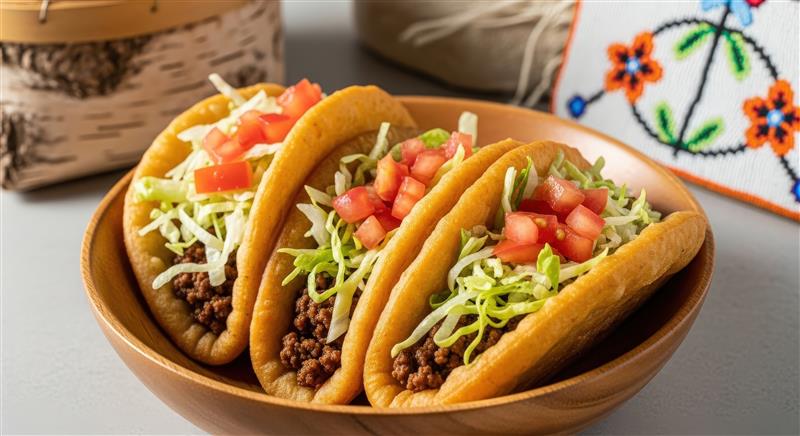
Indigenous fry bread is more than a delicious meal, it’s a symbol of resilience in Indigenous communities. Joe Bonville, Food and Beverage Manager, brought the idea of featuring Indigenous fry bread tacos as the Game Day Feature! during the January 27 hockey game at Co-op Place. He partnered with Kellie Grace, Indigenous Relations Coordinator, to share the story behind this meaningful food. Fans can enjoy the tacos while learning about a tradition that has nourished families and brought indigenous communities together for generations.
Fry Bread, also known as Bannock, has a history of colonialism in many regions across the America’s. In Canada Bannock was first introduced by Scottish fur traders who shared the recipe with Indigenous people. As Settlers moved onto Indigenous lands and claimed them as their own, natural land and agriculture resources became scarce, resulting in food insecurity, starvation and eventually population decline within Indigenous communities.
As the Canadian government enforced the reservation system and relocated Indigenous communities, access to traditional food sources was severely restricted. Instead, communities were provided with rations of Western staples such as flour, sugar, and lard. This shift contributed to health issues, including diabetes and high cholesterol.
Bannock quickly became adapted by Indigenous communities across North America due to forced assimilation and disrupted food systems. It represents the erasure of Indigenous foodways and the imposition of European culture. Bannock’s history is deeply intertwined with Indigenous peoples, reflecting the lasting impact of colonialism and the resilience of Indigenous cultures. Despite its controversial origins, Bannock bread symbolizes resilience within Indigenous communities. Indigenous peoples transformed and adapted Bannock, showcasing their resourcefulness in the face of adversity.
Bannock reflects the complex history of Indigenous communities, from the hardships caused by colonialism to the resilience and resourcefulness shown in adapting new foods. Today, it remains a staple at gatherings and celebrations, serving as a symbol of cultural survival, ancestral knowledge, and community strength.
References
Co-op Place
2802 Box Springs Way NW
Medicine Hat, Alberta
T1C 0H3
Administration: 403-905-0055
Box Office: 403-502-8777
Contact page

Address
2802 Box Springs Way NW
Medicine Hat, Alberta
T1C 0H3
Contact Us
Employment Opportunities
Newsletter Sign Up
Privacy Policy & Code of Conduct
Stories
Administration Office
Monday to Friday, 12-4 pm
403-905-0055
Ticket Office
Monday to Friday, 12-4 pm
Closed on weekends & stat holidays
403-502-8777