


From Garden Tomatoes to Grocery Shelves
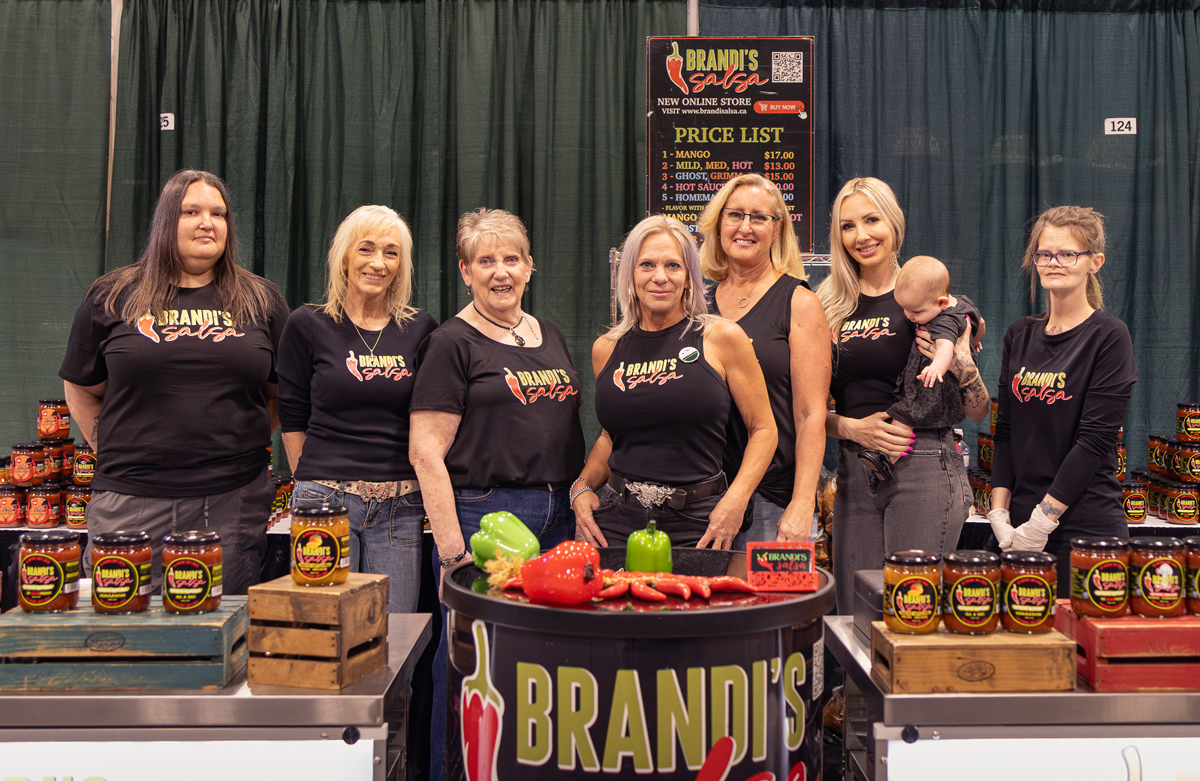
Over the past seven years, Brandi’s Salsa has grown from a labour of love—made in small batches with backyard garden vegetables—into a regional food brand sold at farmers’ markets and on retail shelves across Alberta and parts of Western Canada. Like many entrepreneurs, Brandi Matthews did not set out with a long-term business plan.
Before launching her brand and travelling to farmers’ markets across Alberta, Brandi described herself as an “oil field housewife.” With no formal culinary or business background, she learned how to run a food company from the ground up, including commercial production, scaling operations, managing employees and inventory, meeting regulatory requirements, and approaching major retailers and suppliers.
“I had no idea where to start or who to ask for advice,” Brandi said. “At one point, pure determination kept me going because of how much extra work it required.”
What Brandi did know was how to make truly delicious salsa. Once served mainly at small gatherings and personal events, her salsa quickly earned encouragement from friends and family who urged her to start selling it. Still, it was not until the pandemic that Brandi decided to take that advice seriously.
Finding a Market, One Jar at a Time
Brandi’s Salsa began on a small scale, using garden-grown vegetables and selling directly to customers. Farmers’ markets became an important early testing ground for the business. These events gave her a place to introduce the product, receive immediate feedback and begin developing a loyal customer base. They also helped her build connections with other regional businesses and organizations.
Through regularly attending markets, Brandi began forming relationships with larger local companies and institutions, including organizations such as Big Marble Farms and Red Hat Co-operative. Each new connection helped the business reach more customers and strengthened its presence within Medicine Hat’s growing food and small-business community.
The response at farmers’ markets was substantial and immediate. Brandi’s Salsa frequently sells out of its entire inventory while attending farmers’ markets across Alberta, from Edmonton and Grande Prairie to Lethbridge and Medicine Hat. The company has also operated booths at conferences, markets and pop-up events throughout Saskatchewan and British Columbia. At times, selling out meant returning home and purchasing hundreds of pounds of produce to prepare the next batch. Those early market appearances did more than generate sales. They demonstrated that the demand extended far beyond Brandi’s immediate circle of friends and family.
Growing Beyond the Farmers’ Market
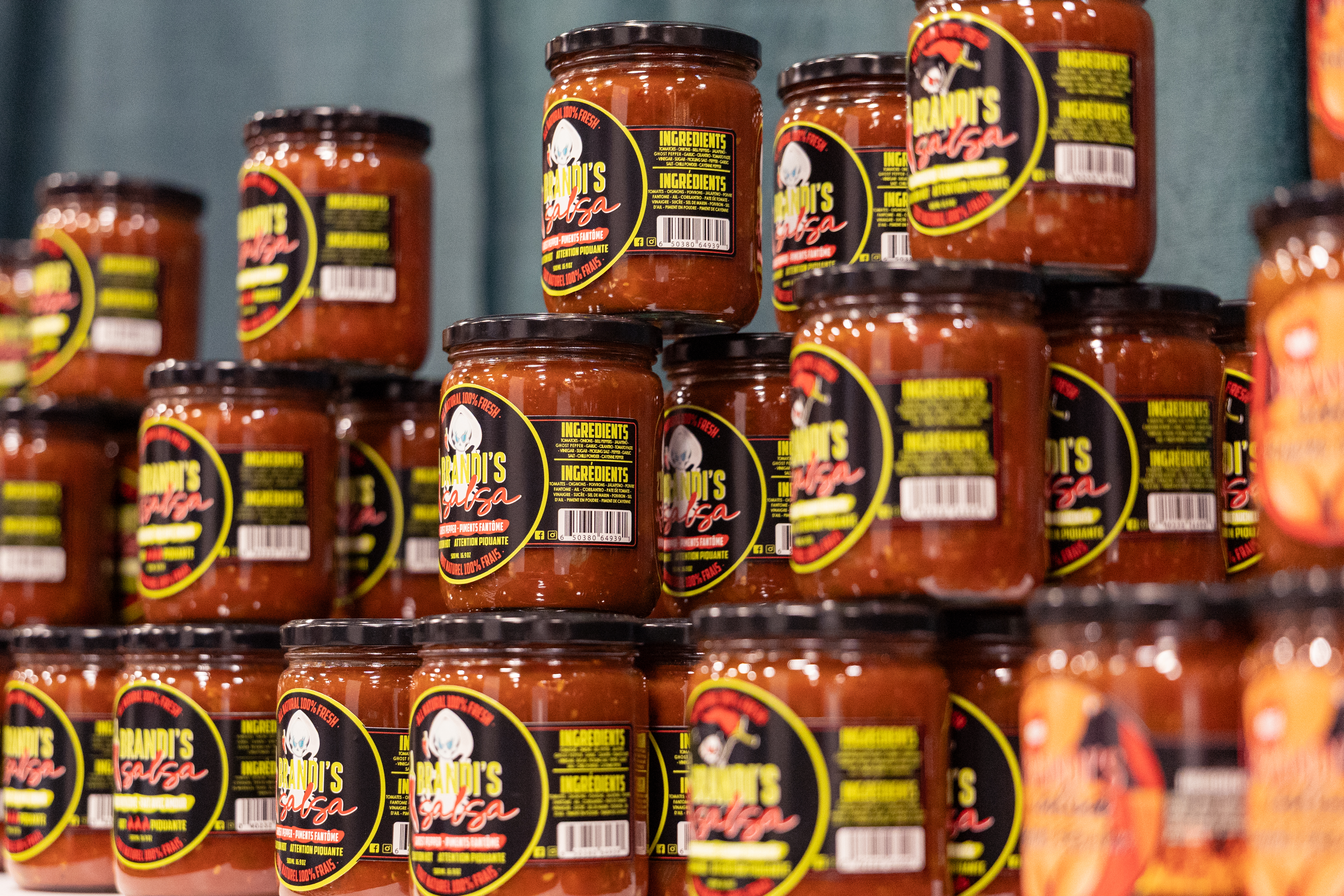
Today, Brandi’s Salsa products are available through several multi-location retailers, including South Country Co-op and Nutters. Customers can also order products through the company’s e-commerce website, which was developed through a partnership with Medicine Hat College. The online store has helped Brandi reach customers who may have discovered the brand at an event or market but do not live near one of its retail locations.
The company’s product line has also grown substantially. What began with a single salsa offering now includes eight salsa flavours, Dragon’s Breath hot sauce and premium tortilla chips. The current bestseller is the mango salsa, which combines sweetness with a noticeable kick of heat.
The expanded selection allows the company to appeal to customers with different tastes while remaining focused on the fresh, natural flavours that originally distinguished the product. No preservatives, additives or artificial ingredients are used. The products are also vegan-friendly, with tomato-based salsa options described as gluten-friendly.
Maintaining quality becomes more complicated as a food business grows, particularly when customers expect every jar to deliver the same flavour and texture. Each Brandi’s Salsa product is sent away for specialized testing to help ensure quality, safety and consistency from one batch to the next. That level of care has allowed Brandi to grow production without losing sight of what made the original salsa successful.
A Product Rooted in Southeast Alberta
Although Brandi began by growing many of her own ingredients, the scale of the business eventually made it necessary to source larger quantities of produce. Fortunately, Medicine Hat and Southeast Alberta are home to a significant greenhouse and agricultural sector. Brandi now works with local greenhouse producers who select and pick produce specifically for her orders. Her purchasing decisions are based less on appearance than on flavour, freshness and suitability for salsa production.
“I don’t need A1, aka pretty, perfect-looking produce,” Brandi says. “What matters to me is taste and quality. That’s something I know that I get from these local producers.”
Produce that may not meet the visual expectations of a grocery store display can still be ideal for salsa. A tomato does not need to be perfectly shaped to provide the right taste, texture or freshness. This approach creates an additional local market for area growers while allowing Brandi to source ingredients close to home. It also strengthens the connection between the final product and the region where it is made.
Brandi has remained equally committed to keeping production in Medicine Hat. The company pays a premium to operate from a commercial kitchen in the city’s downtown, but producing locally remains an important part of the business. That commitment keeps spending, employment and food production activity within the community. It also allows Brandi to stay close to the producers, customers and partners that helped the company grow.
Building a Business Through Local Support
Like many entrepreneurs, Brandi has had to learn how to finance growth while managing the day-to-day realities of operating a business. She has accessed loans, grants and business development programs offered through regional partners, including Community Futures Entre-Corp and the Food and Beverage Processing Entrepreneur Development, or FEED, program.
These supports have helped her invest in the company, expand production and move beyond the limitations of a small home-based operation. Brandi’s experience demonstrates how regional business programs can help entrepreneurs bridge the gap between having a popular product and building a sustainable company.
A strong recipe may attract customers, but growth also requires commercial space, equipment, testing, packaging, marketing, distribution and working capital. For a food producer, the cost of preparing the next batch can arrive well before revenue from that batch is realized. Access to financing and knowledgeable partners can therefore make the difference between a business remaining a side project and becoming a full-time operation.
Creating Jobs Through Growth
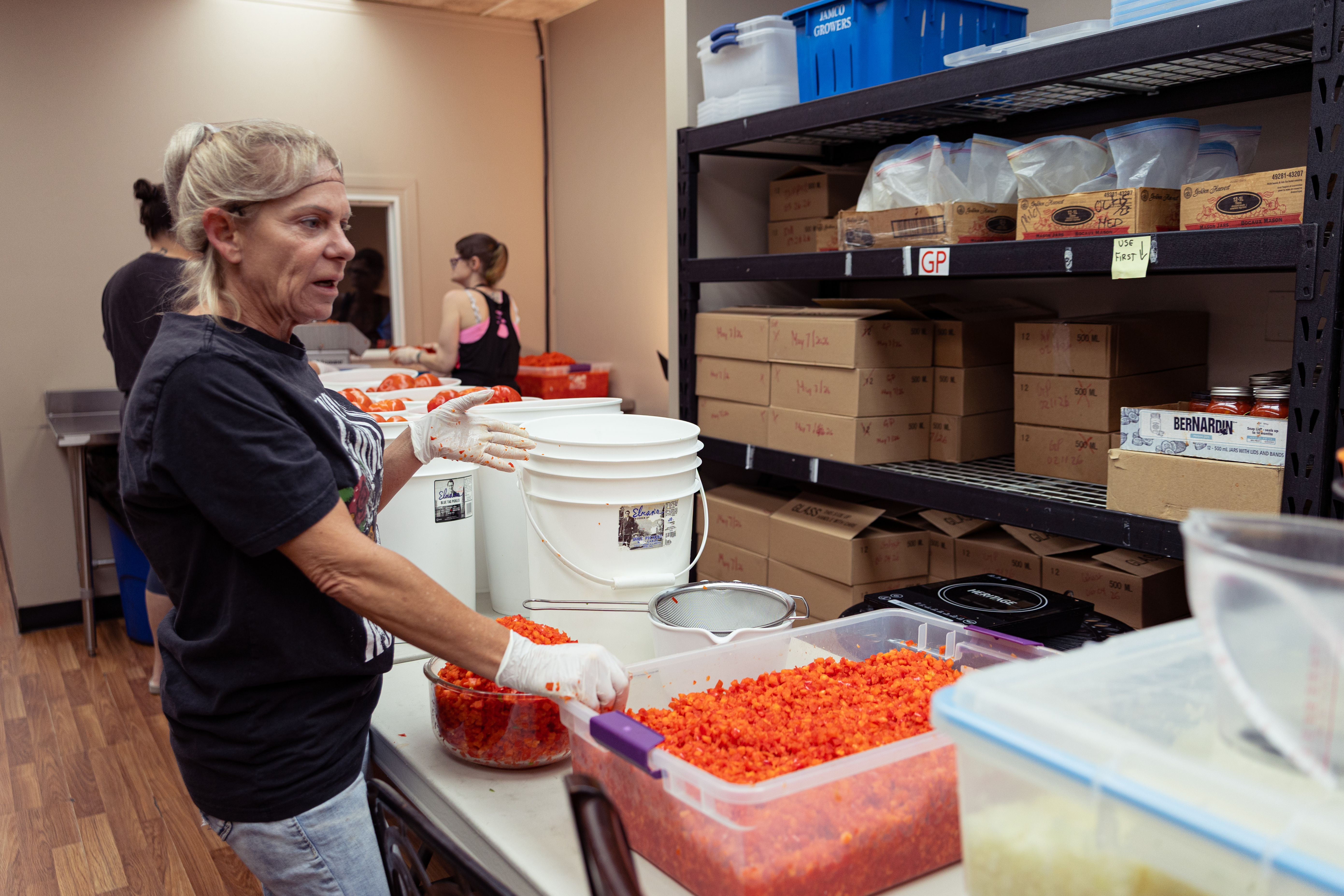
As demand for Brandi’s Salsa increased, so did the amount of work required to keep products on shelves and market tables. The company has grown to employ several full-time workers, including a combination of friends and family. Among them is Brandi’s 72-year-old mother. This close-knit approach reflects the personal nature of the business, but it also represents a meaningful economic impact.
Brandi’s Salsa is no longer simply producing jars of salsa. It is purchasing from regional growers, renting local commercial kitchen space, creating employment, working with retailers and bringing revenue into Medicine Hat through sales made across Western Canada. Each stage of growth increases the number of people and businesses connected to its success.
The Challenge of Scaling Without Sacrificing Quality
The company’s greatest opportunity may also be its most significant challenge. Demand has grown, but producing a chunky, fresh salsa at a larger scale is not as straightforward as simply purchasing a faster blender.
Brandi’s current production process includes the use of a manual chop box. The method takes time, but it prevents tomatoes and other delicate ingredients from being crushed into a paste. That texture is central to the product. Automating the process with the wrong equipment could increase volume while fundamentally changing the salsa customers expect.
Even with appropriate equipment, Brandi would face another barrier: Southeast Alberta currently lacks a local food-grade co-packing or co-production facility capable of taking on this type of production. Co-packers allow food companies to manufacture and package larger volumes without building an entire processing facility of their own. Without that infrastructure nearby, growing beyond Brandi’s current production capacity could eventually require the company to move some or all of its operations elsewhere.
So far, that is something Brandi has steadfastly refused to consider. She wants the business to remain in Medicine Hat.
Her situation highlights a broader opportunity for Southeast Alberta. The region has access to greenhouse production, agricultural expertise and entrepreneurs developing value-added food products. Additional food-processing and co-packing infrastructure could allow more of those products to be prepared, packaged and distributed locally. It could also help companies such as Brandi’s Salsa increase production without separating their brands from the communities and supply chains that made them possible.
Staying True to the Original Recipe
In only a few years, Brandi Matthews has gone from making salsa with vegetables from her garden to operating a growing food company with employees, retail distribution and customers across several provinces. The business has expanded considerably, but the foundations remain familiar: fresh ingredients, hands-on production, strong relationships and a commitment to flavour.
Brandi did not begin with a detailed plan for entering the food-processing industry. She began with encouragement from the people around her, a product they believed others would enjoy and the determination to find the next step. One market led to another. One retailer led to several. A single product became an expanding lineup.
Now, the challenge is no longer convincing people to try Brandi’s Salsa. It is producing enough to meet the demand while preserving its distinctive quality and keeping the company rooted in Medicine Hat.
Brandi’s Salsa is located at 526A Third Street SE in Medicine Hat. Products are available online, through participating retailers and at markets and events across Western Canada, or online at brandisalsa.ca.
