
Indigenous History Month: The Saamis Archaeological Site
By Jenni Barrientos, Assistant Archivist, Community Development
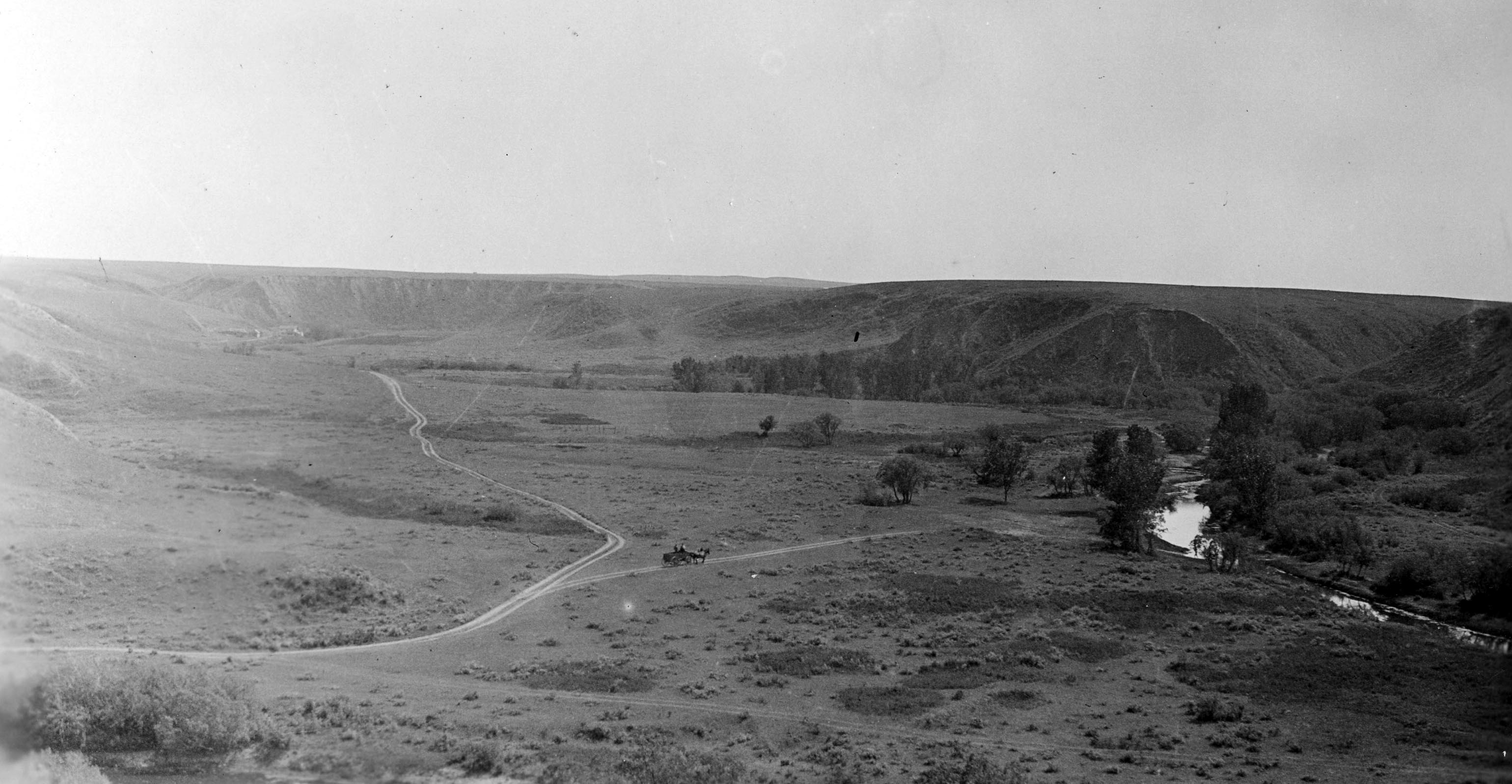
The Saamis Archaeological Site is located in Medicine Hat, below Saamis Tepee and visible from the Trans Canada Highway. This valley, carved by Seven Persons Creek, attracted Indigenous peoples for centuries as a place of great resources, especially buffalo. It was intensively occupied repeatedly between A.D. 1390 and A.D. 1820.
The 36 hectare area was declared a Provincial Historic Site in 1984, covering 36 hectares (about 90 acres). For centuries the rich resources and shelter drew people to what is now known as Medicine Hat.
The upper terrace was heavily used as a winter and early spring campsite. Evidence of living floors, bone piles, campfires, pits and unused caches demonstrate a broad range of activity supporting both small and larger groups inhabiting the valley.
The lower terrace was a place for intensive butchering and processing of buffalo. From the manner their bones were laid out, it is understood that the site was not the place where the buffalo were hunted. Rather, communal hunts would occur in the vicinity, carcasses were brought to the site, and the terrace was used for processing. The meat not only provided a rich food source for the months of occupation, but it would also be dried and tallow collected. Hides and other parts of the animals also supplied the occupants as they travelled through the warmer months.
Although the site is most associated with buffalo, other game was processed at the site, including eagle, antelope, wolf, fox, and bear. Pottery has also been found. Archaeologists also have discovered European goods indicating the broad commercial networks accessed by the people who utilized this site. The diversity of materials shows the complexity of material and social culture, and the extent of trade networks.
In the 20th century, the site faced various challenges due to habitation in the area. During the late 19th century there was extensive harvesting of buffalo bones in support of the fertilizer industry. It is not clear if the site was interrupted by such activity. The valley floor was homesteaded in the 1920s, and in the years before excavation began, various plans that would have destroyed the site never came to fruition, including a 27 hole golf course, and flooding the valley to create a recreation area.
Archaeology occurred on the site between 1971 and 1993 as evidence of rich cultural life.
As we observe National Indigenous History Month in June, sites like Saamis offer an opportunity to learn more about the rich histories, cultures, and contributions of First Nations, Inuit, and Métis Peoples. The archaeological evidence preserved at Saamis provides valuable insight into centuries of Indigenous life on this land and encourages reflection on the enduring connections between Indigenous communities, their histories, and the places they have called home.
Stay up to date.
Subscribe to eNotifications to stay connected with City of Medicine Hat news, activities, events, programs, operations and more.


