
New Exhibit ‘Hidebound’ Explores the History and Impact of Leather
By Tom Hulit, Curatorial Assistant Exhibitions & Collections, Community Development
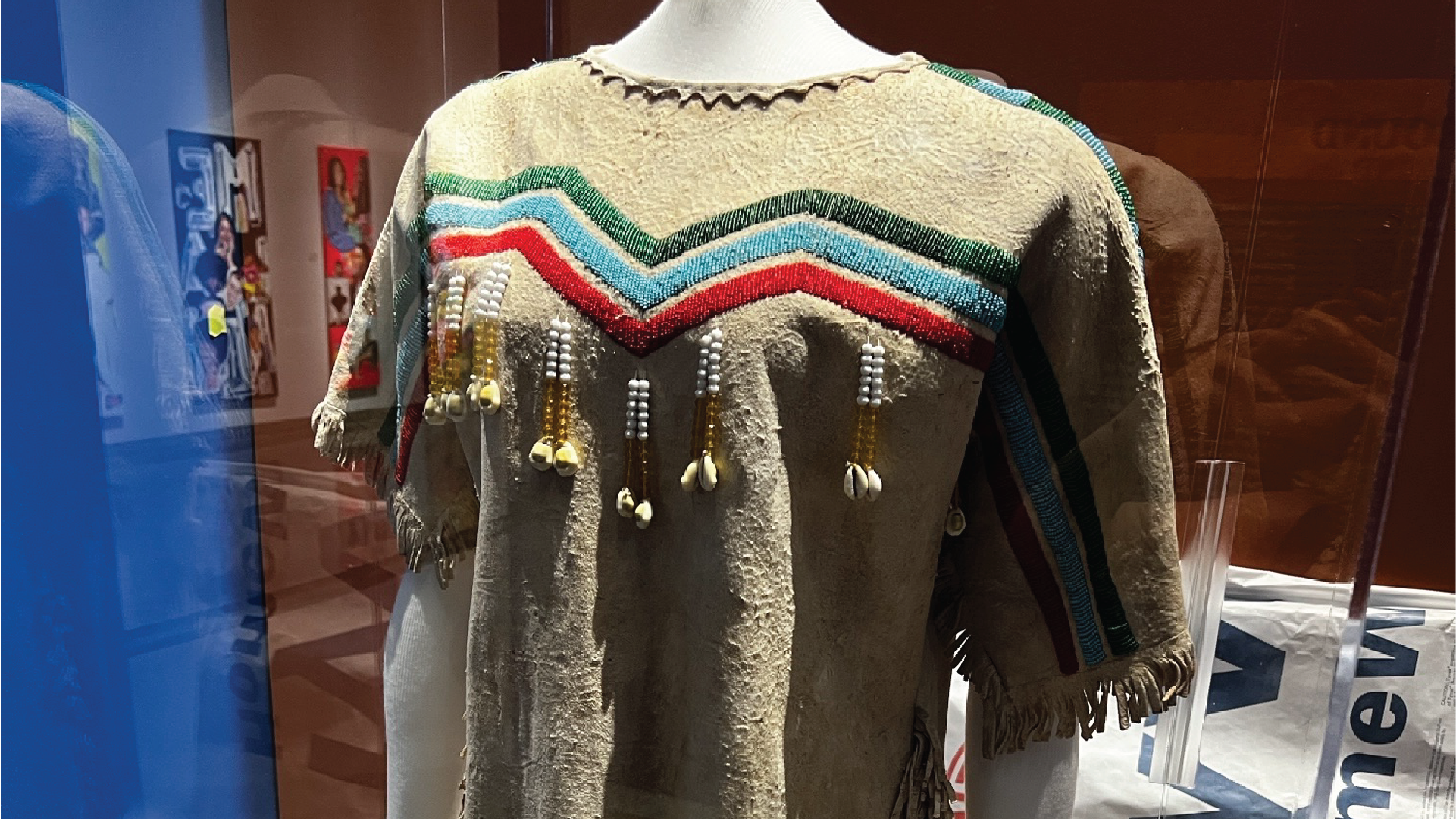
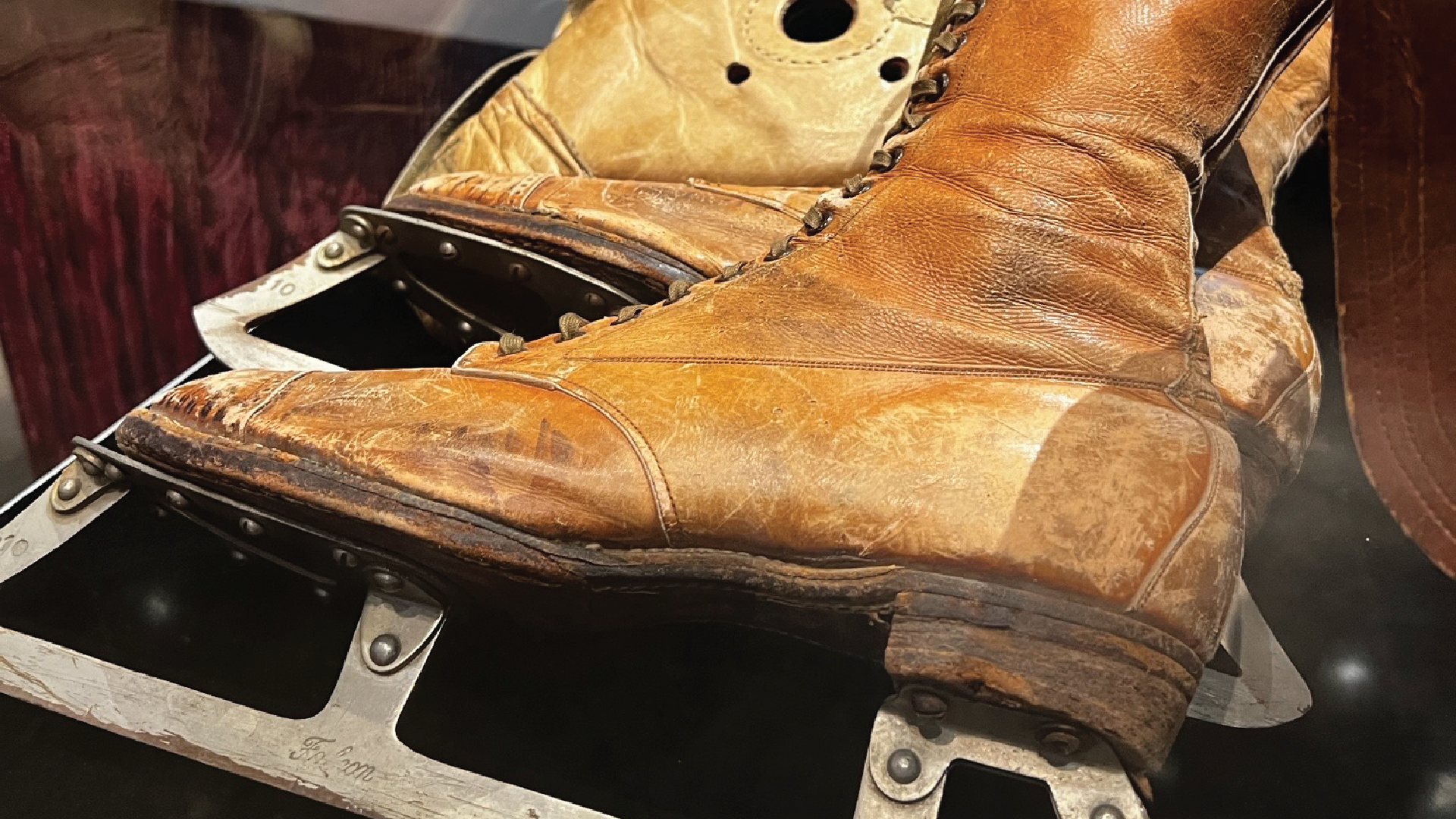
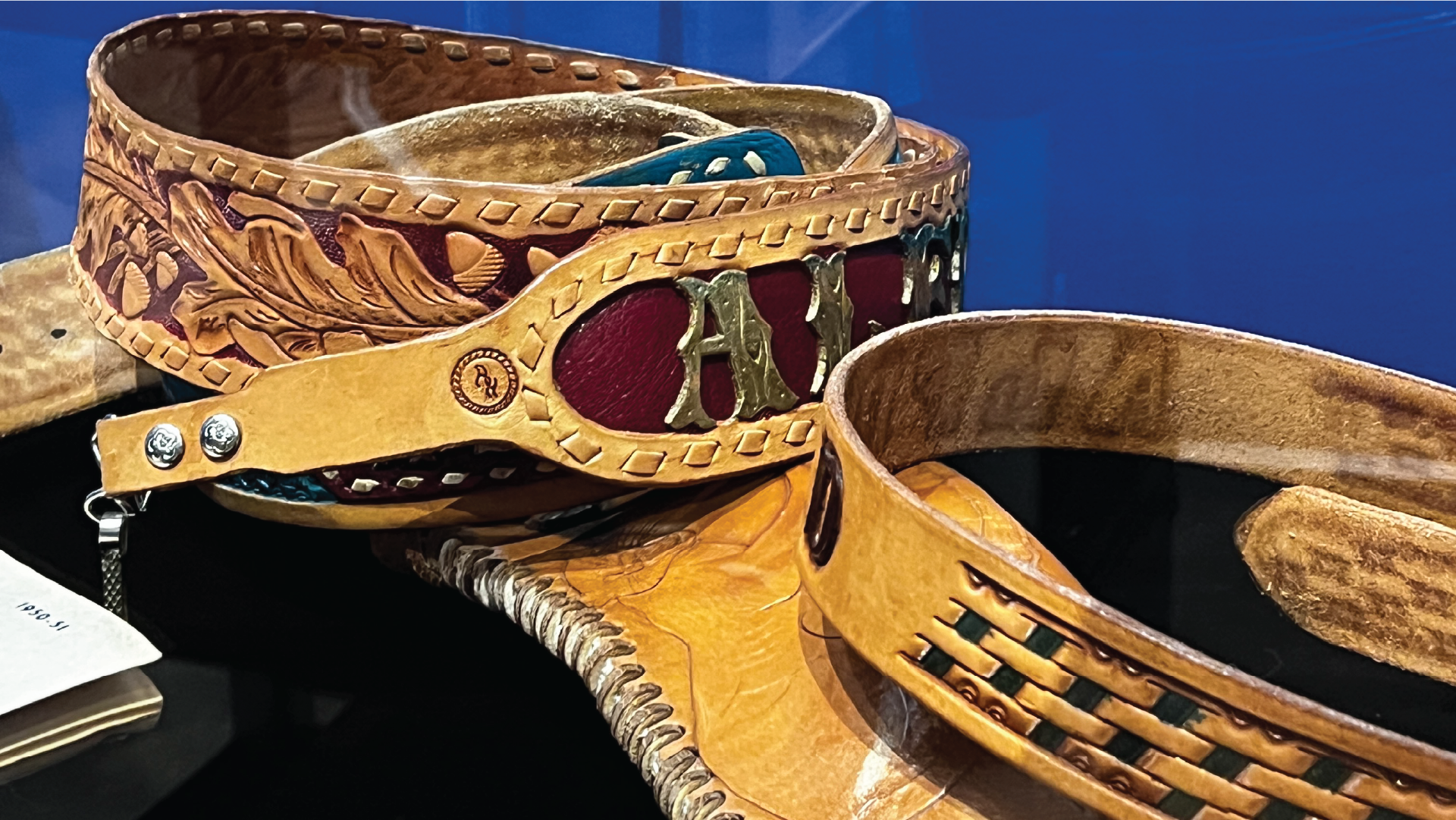
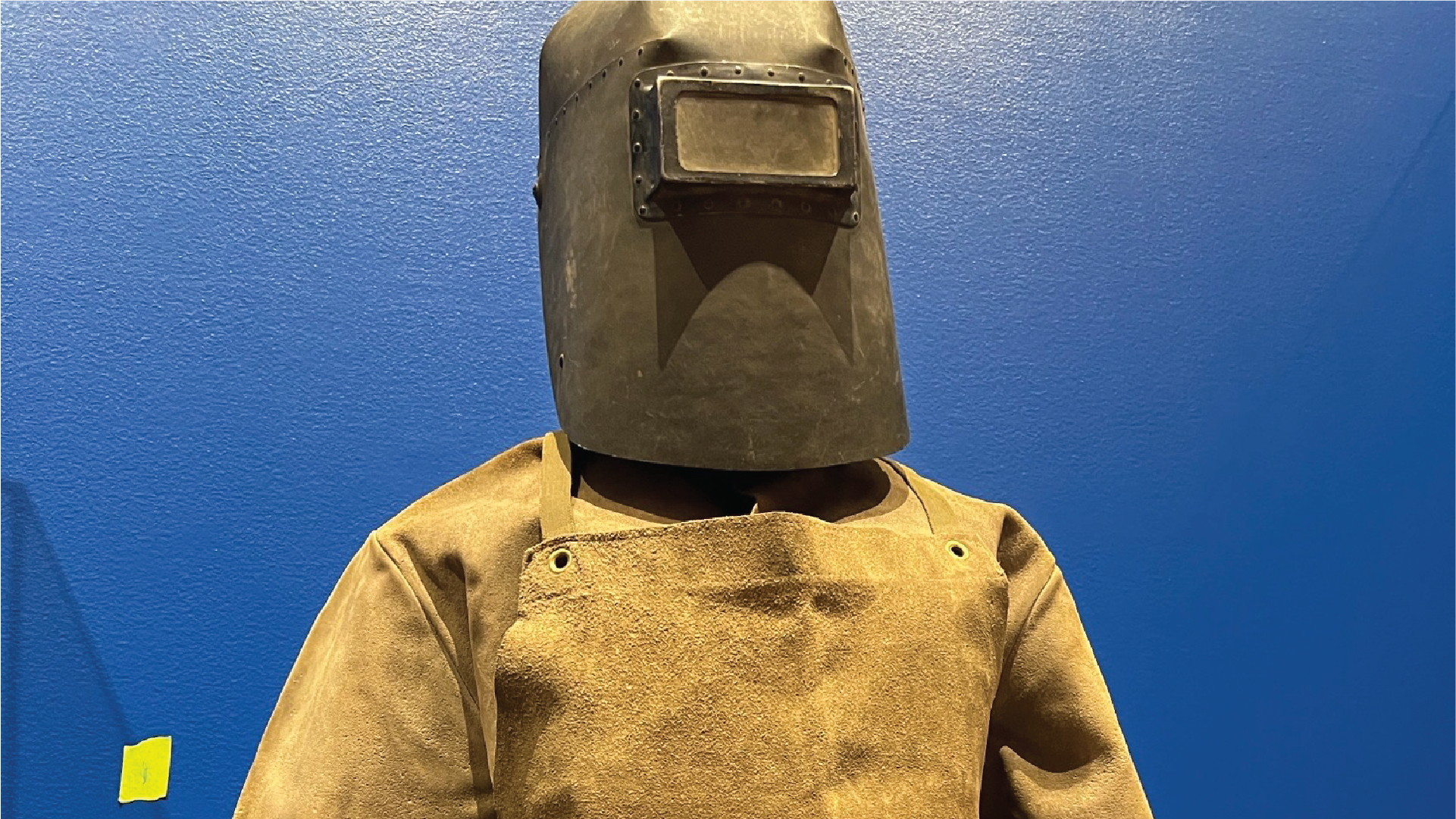
Where does the inspiration for an exhibit come from? I often start by looking at what story I might be able to tell with what we have right here in our collections. The Esplanade Arts & Heritage Centre holds a tremendous range of artifacts, artworks, photographs and archival records. It is a wonderful collection to work with and holds so many interesting stories and possibilities. More than two years ago an idea for a new heritage exhibit began to roll around in my mind. I was looking at the materials from which our museum artefacts are made and realized something I thought was quite interesting: Prior to the development of synthetic materials, humans really did not have a very broad range of materials to work with. The further back into history you look, the fewer choices there were. One material in particular really stuck out; leather.
Prior to the 20th century, most items across the world were made of wood, bone, stone, metal, ceramic, textile, or leather. Each of these mostly natural materials required some preparation before they could be used to make an item. Stone needs to be quarried, metals need to be smelted, wood needs to be cut into lumber. Bone often needs to be boiled. For leather, the hides need to be tanned. Each material requires quite deep knowledge of the proper processes. Careful application of heat, the knowledge to harvest materials in the proper season, or the use of particular chemicals were all skills that were learned over many years and refined over centuries.
Leather is an interesting material. Generally a byproduct of the food industry, animal hides are simply waste, but they are potentially very useful waste. Unprocessed, they will either dry out and become very hard or they will rot, depending on the climate. With the right processing, they can become what is likely the earliest material used for clothing in human history. And, this material remains useful to this day, often for many of the same reasons. It is available, durable, often waterproof, and to some people, quite beautiful. The leather that clothed 5,000 year-old European alpine traveller Ötzi the ice-man is much the same as what aviatrix Amelia Earhart wore on her journeys. The leather and rawhide used to hitch horses to the wagons of Medicine Hat's early pioneers is the same as that used to harness horses to the chariots of ancient Egypt's pharaohs. Why change what works?
Well, that is a good question. Many people do not like using animal products. The chemicals used to make leather can be quite toxic and harmful to both the environment and human health. Many people choose to use other materials that have fewer negative impacts. Science has been developing leather alternatives for more than a century, albeit with varied success. There are currently many good vegetable-based alternatives, though many use petrochemicals in their construction. Other promising alternatives include leather-like materials made from mycelium, the root materials from mushrooms. Leather is certainly still a viable material in a world that uses animals for food, but there are now many other options.
The collection of historic artefacts held by Esplanade Arts & Heritage Centre includes more than 900 pieces that either contain or are entirely made of leather. It is one of the most common basic materials in the collections. Hidebound is a look at this material, its pros and cons, its history and its place in our local history. Join us at 7:00pm on the 26th of June for the opening reception of Hidebound, our latest in-house curated heritage exhibition.
Read more about the event here.
Stay up to date.
Subscribe to eNotifications to stay connected with City of Medicine Hat news, activities, events, programs, operations and more.


