
The Sokitahpe Home: Medicine Hat’s Residential School That Was Almost Built
By Jenni Barrientos, Assistant Archivist, Community Development
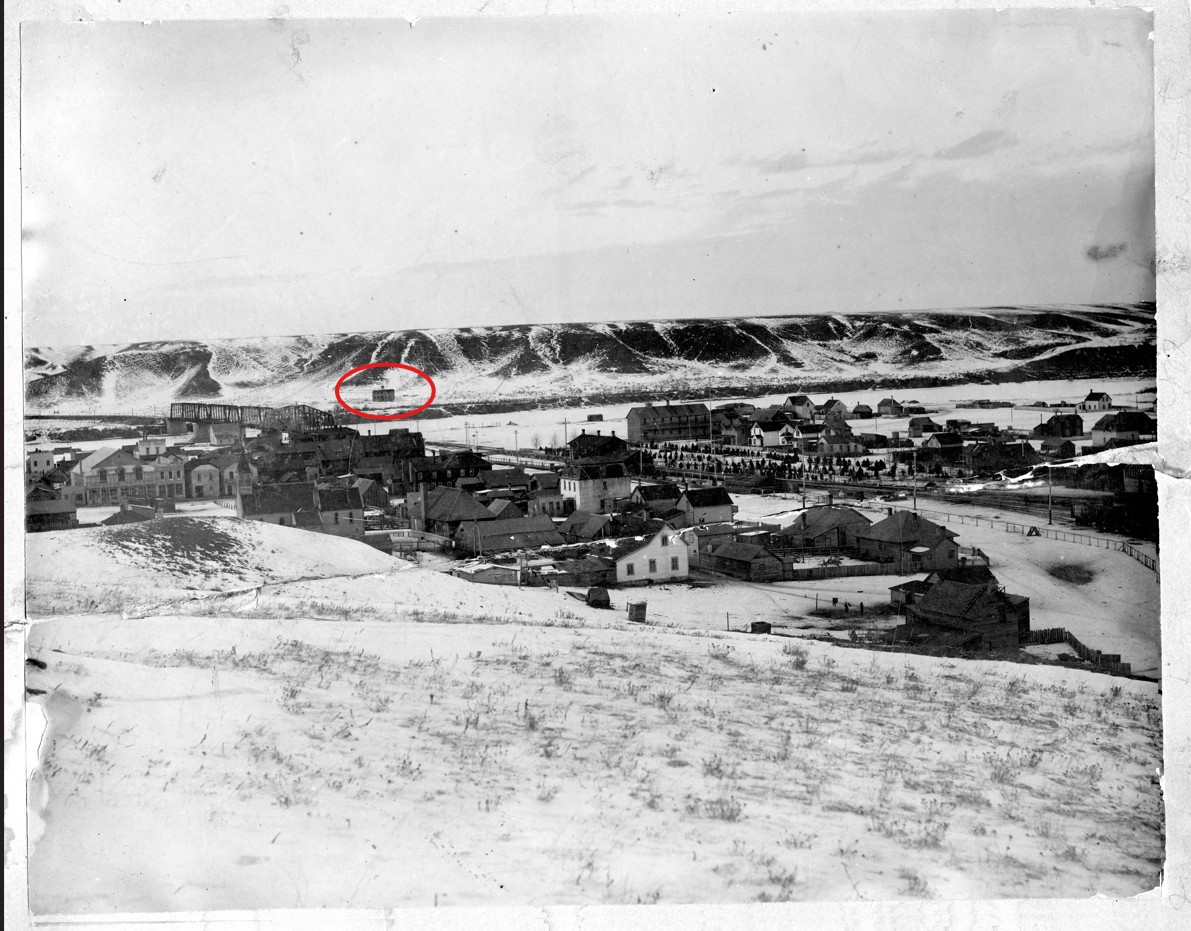
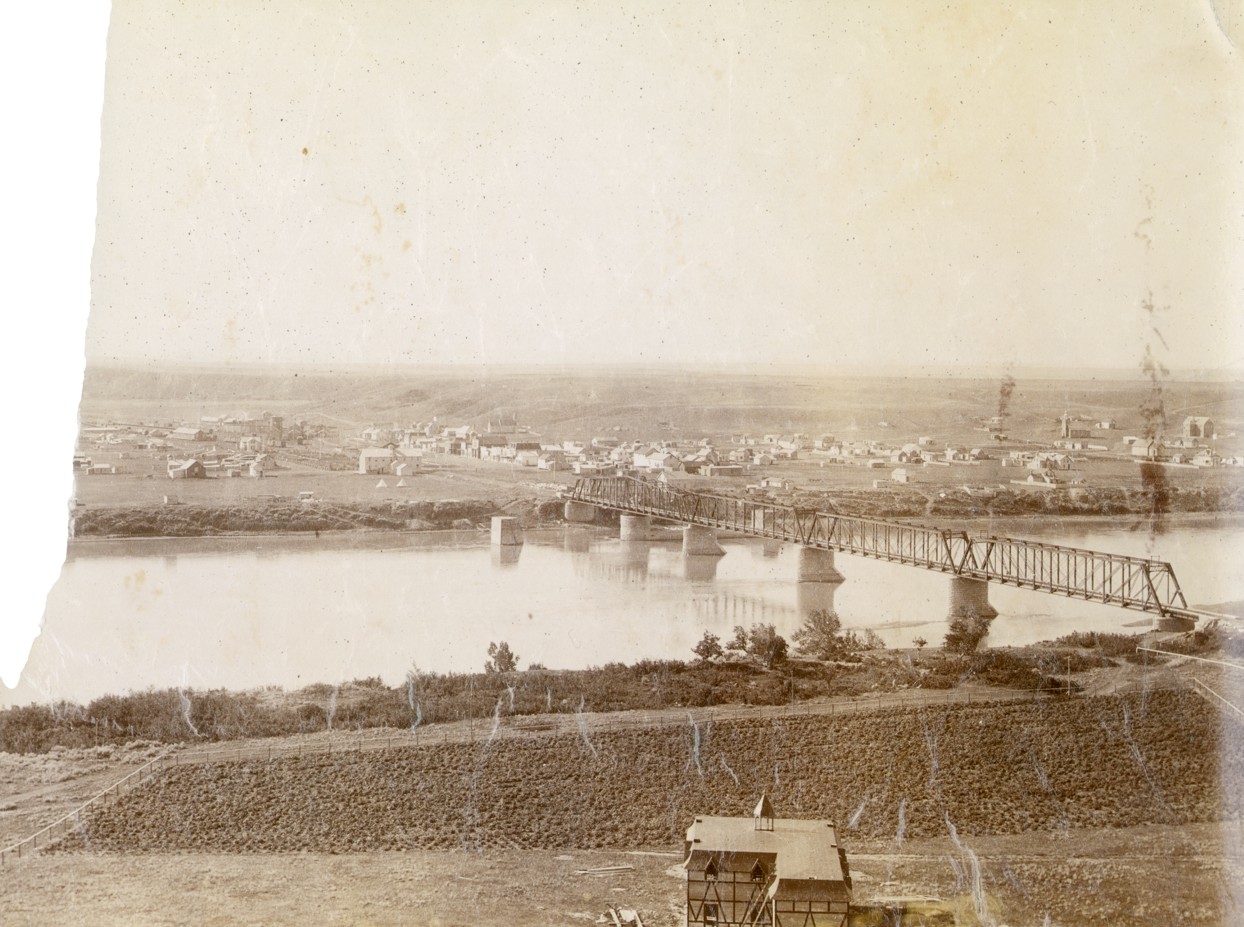
While the exact spot is yet unknown, somewhere on the hills near what is now Altawana Drive and Parkview Drive, Medicine Hat had its own residential school, built sometime between 1890 – 1898. The large building was 38 feet by 40 feet, and two stories high, and constructed at least partially by H. Yuill. A pamphlet that advertised its construction states it is “substantially built of concrete”, and at the time, it sat as one of the few buildings on the North side of the river; built even before Finlay Bridge connected Riverside to the rest of the town.
The residential school was largely promoted by Reverend Edward Francis Wilson, of the Anglican Church. At the time, residential schools were touted as “a sort of duty by the Government” and that “the Government ought to feel grateful to any church of community which voluntarily comes to its assistance in this most difficult work” (Medicine Hat Times, Aug. 27, 1891). Indeed, the citizens of Medicine Hat were excited at the prospect of having a residential school, and under Wilson’s guidance, the project was so named the Sokitahpe Home, or the Indian Industrial School. Wilson had also opened two other residential schools, one in Manitoba (Washakanda Home in Elkhorn), and one in Ontario (Shingwauk Home in Sault Ste. Marie which operated into the 1970s); and was certain that a school in Medicine Hat would be well received. He bought the land for $700 in early 1890, and the project included a call for donations to the citizens of Medicine Hat.
Wilson was under the understanding that the federal government would be pleased at the prospect of a purpose-built residential school – and so fundraising and building commenced almost immediately. Wilson wrote numerous papers and books about his work opening residential schools and discussed finances at great length as “it is a great responsibility for one man to have to raise this large amount and to keep all this extensive work in operation. I have felt forced to complain sometimes that this work of mine […] has been looked upon too much as a personal hobby of my own, rather than as work meriting the sympathy and support of the church and community at large.” (Wilson, 1890).
Under this call, the citizens of Medicine Hat rallied, and donated large amounts to the cause to have the school built, even before federal funding was secured. Wilson, along with his brother, oversaw the construction of the building in Medicine Hat which was “to include a porch, hall, superintendent’s sitting room and office, dining room, kitchen and pantry […] the next level would be a sick room, room for linens, and the main school rooms which would also serve as dormitories until a secondary wing, separate for boys and girls was built” (Wilson, 1891). The secondary wing would never be completed, as the federal government announced it would not fund the residential school in Medicine Hat. We only have one image of the building as it stood, almost completed and almost alone on the north side of the river.
Such an announcement came with shock and dismay to the citizens, and Wilson. Eventually the land was sold for $11,000 in 1906, and the building was dismantled into its component parts. A partial legacy lived on, as the lumber was reused to build a small building behind St. Barnabus church which was used for a meeting hall and caretaker residence, well into the 1980s. That building was still called “The Indian School” perhaps due to the reuse of materials from Wilson’s failed project. While the school never was used for its intended purpose, it is important to understand and know that it is a case of history as it almost was, and hopefully will never be again.
As we recognize National Indigenous History Month, stories like this provide an opportunity to reflect on the impacts of past decisions and policies that have shaped Indigenous experiences in Canada. Remembering places like this, both for what they were and what they might have become, helps deepen our understanding of this history and its lasting effects on communities, families, and the relationships between people and the land.
1181.0001 – Image of Medicine Hat, taken from Crescent Heights. Dated approximately ca. 1890. One of the only known images of the Residential School, in the bottom centre of the photograph. The image belongs to the City of Vancouver Archives, but is shared with permission.
0061.0001 – Residential School, Sokitahpe Home, circled in red. Esplanade Archives image 0061.0001, dated ca. 1888.
Stay up to date.
Subscribe to eNotifications to stay connected with City of Medicine Hat news, activities, events, programs, operations and more.


