
Theatre Transformations
by Jack Nemo, Event Technology Specialist at the Esplanade Arts & Heritage Centre
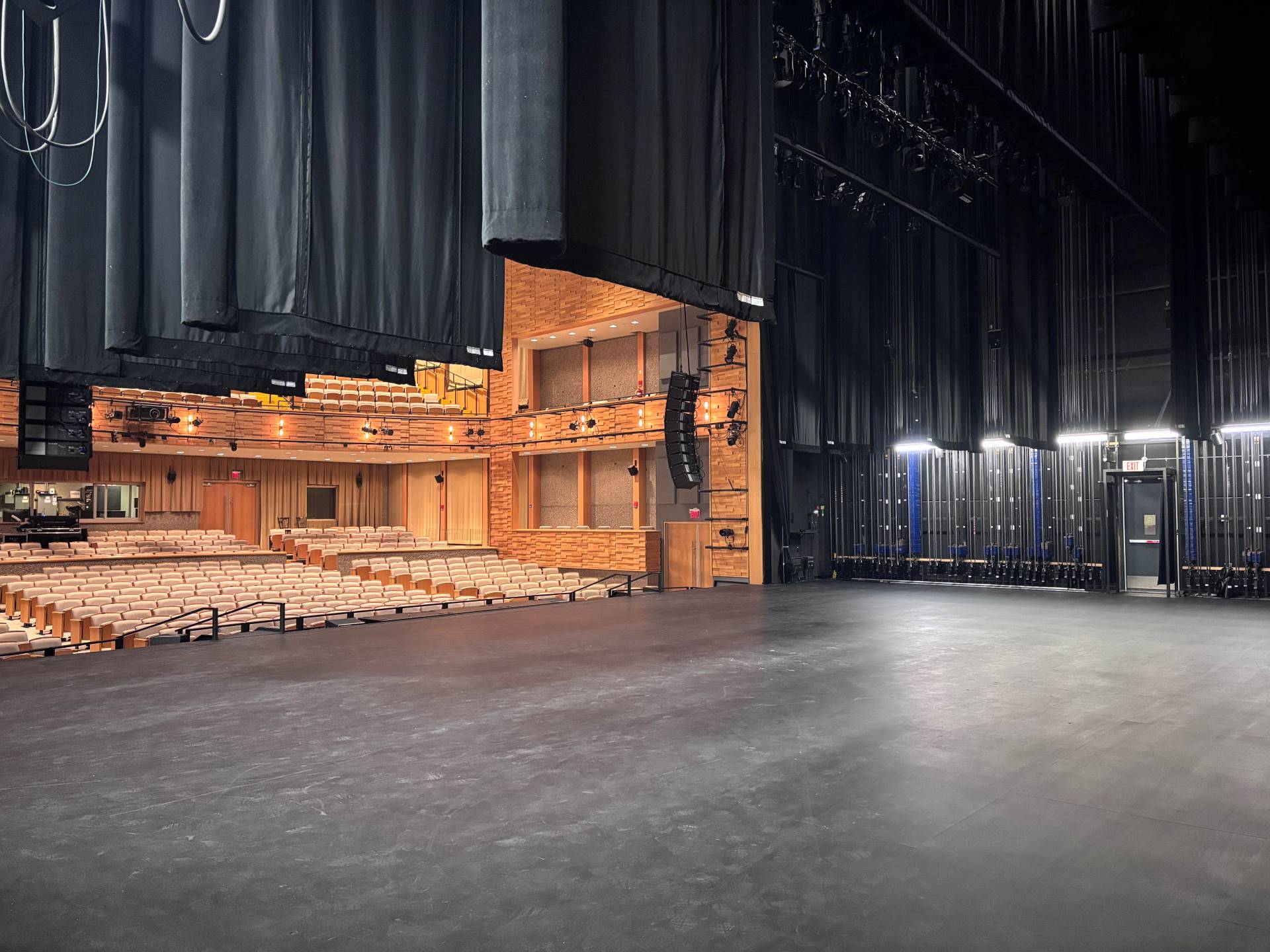
I work at the Esplanade theatre and when I get to work every day the lights are out, the curtains are up, and the stage is swept clean. It’s a blank slate, ready to be transformed into whatever it is needed to be that day. And at the end of the night, after the crowds have gone home and the trucks have left the loading docks, that’s what it will be again, a blank slate ready for the next show.
It’s that transformation that makes my world so interesting.
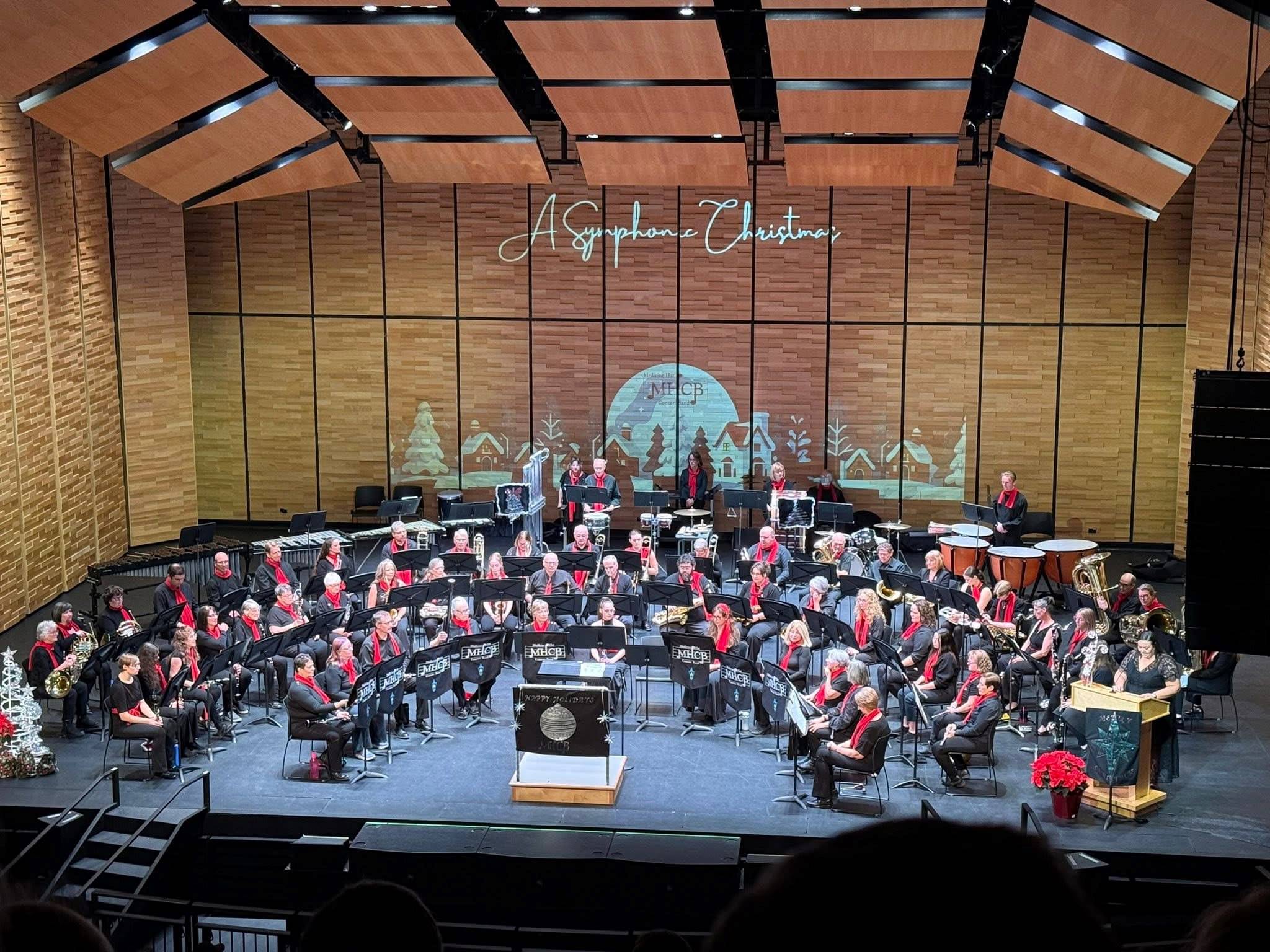
For an orchestra concert, this means creating what we call a “concert shell,” transforming the theatre into a more reverberant space so that every live, unamplified instrument can fill the room. We start by raising the curtains around the seating area. Then we lift the curtains and lights onstage into the space high above the stage floor, called the fly tower. The fly tower is also where the large wooden panels that form a temporary ceiling above the stage are stored. Each of these panels weighs 2160lps, and once in place they help reflect sound from the stage out toward the audience.
At the back of the stage, we have 30-foot-tall wall sections that are rolled into place to create the sides of the concert shell. These walls are made up of wooden squares that vary in size and depth, matching the wooden surfaces found throughout the theatre. This uneven pattern isn't just decorative either, it’s designed to improve the acoustics by scattering sound reflections evenly throughout the room.
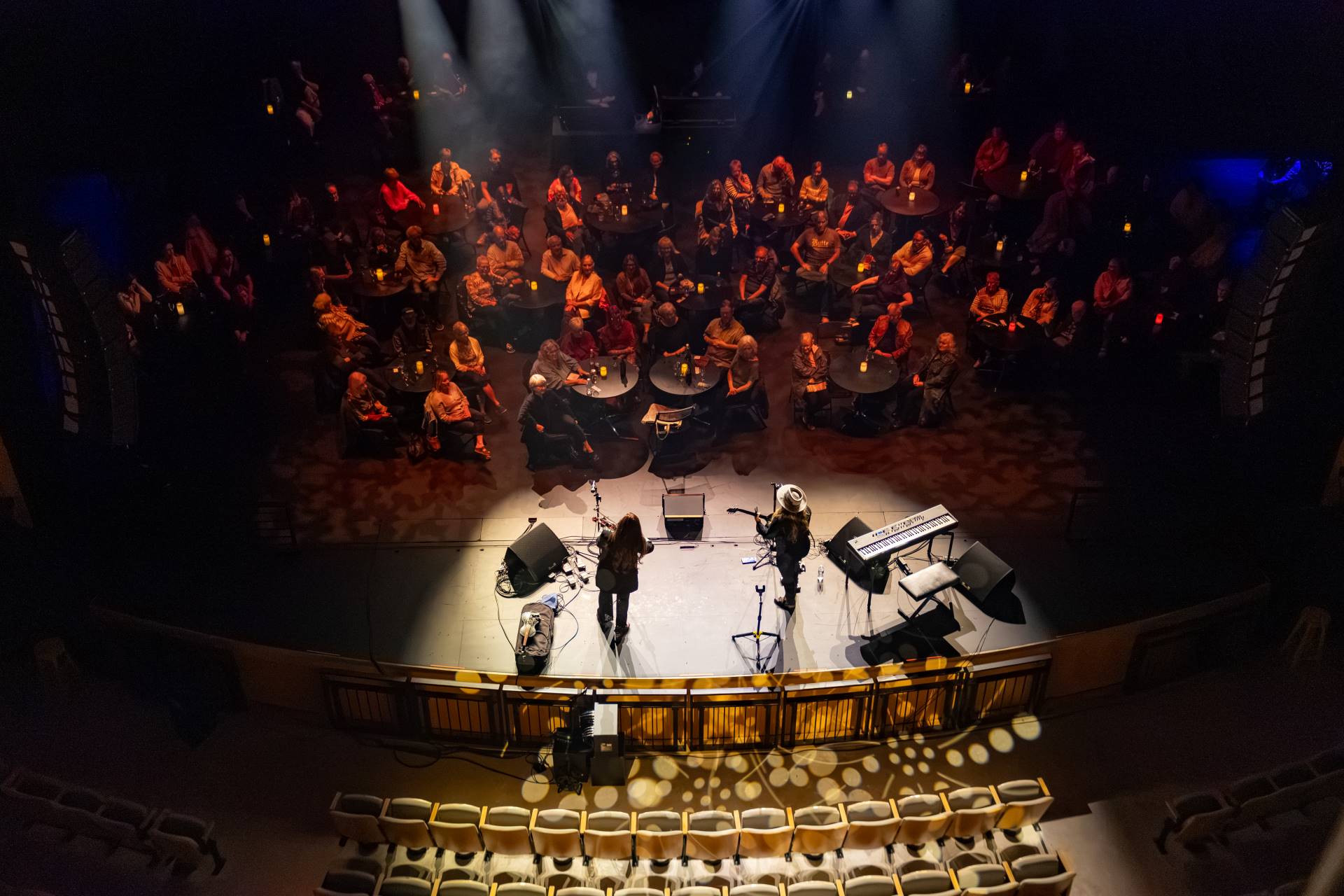
On other days, the transformation means flipping the audience and performers around for our On-Stage Series. This is where the audience gets the chance to come backstage, sit right on the stage itself, and look out toward the auditorium to see what the performers normally see. For this we extend the stage by raising a large platform in front of it, almost like a giant elevator. This is where the artists perform, with their backs to the empty auditorium seats and the audience sitting on the stage in front of them.
During some musicals, that same platform we raised for the On-Stage Series can be lowered all the way down to the basement, creating an orchestra pit. This allows a live band to provide music for the actors without taking up valuable space onstage.
Other times, we're building truss structures anchored into the concrete so circus performers can fly high above the stage. Or we’re aiming projectors to add video elements to the stage. Or we’re making musicals that were designed for stages twice our size work without sacrificing the production.
The audience usually only sees the finished result, and that's part of the magic of live performances. But for those of us working behind the scenes, there's something special about watching the same empty stage become something completely different from one day to the next. And no matter how big or complicated the show, eventually it all comes down, the floor gets swept, and the theatre is a blank slate once again.
Next time you’re at a show inside the Esplanade Theatre, I hope you’ll look around and wonder what went into transforming the space for that performance. To see what’s upcoming at the Esplanade and to get your tickets, visit tixx.ca.
Stay up to date.
Subscribe to eNotifications to stay connected with City of Medicine Hat news, activities, events, programs, operations and more.


